Eczema Ka Ilaj: Is There a Cure? An Honest Guide for Pakistan
If you have searched “eczema cure” or “eczema ka ilaj” at 2 a.m. because the itching won’t let you sleep, you are not alone. Millions of people in Pakistan live with eczema and psoriasis, and most of them are looking for one thing: relief.
This guide gives you a straight answer, without false promises, and explains what actually helps you manage these conditions day to day.
The Short Answer (Seedha Jawab)
There is currently no permanent cure for eczema or psoriasis. Both are long-term (chronic) skin conditions. They can improve, calm down for months or years, and flare up again. With the right routine and medical guidance, many people keep their skin comfortable and their flare-ups under control.
Eczema aur psoriasis ka koi permanent ilaj abhi mojood nahi hai, lekin sahi care aur doctor ki rehnumai se inhe achi tarah manage kiya ja sakta hai.
اردو میں: ایکزیما (Eczema) اور سورائسس (Psoriasis) کا فی الحال کوئی مستقل علاج موجود نہیں، لیکن درست دیکھ بھال اور ڈاکٹر کی رہنمائی سے انہیں اچھی طرح قابو میں رکھا جا سکتا ہے۔
Be careful of any product, hakeem, or social media page that promises a “100% cure” or “permanent ilaj in 7 days”. These claims are not supported by medical evidence.
Eczema vs Psoriasis: What’s the Difference?
Eczema (atopic dermatitis)
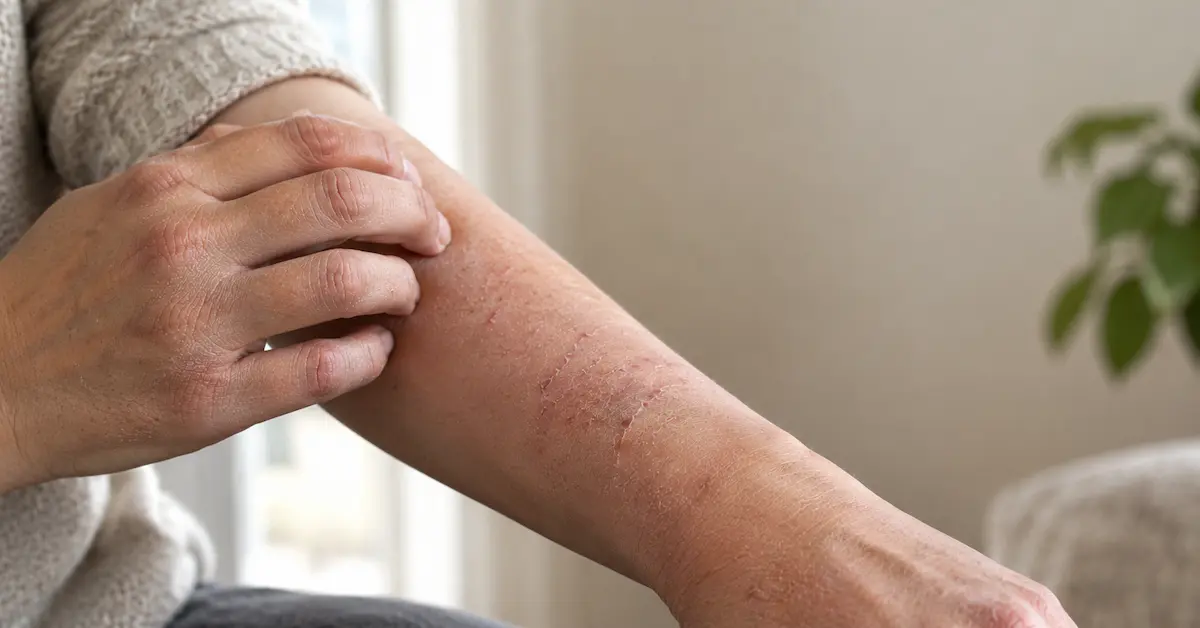
- Intensely itchy, dry, red or darker patches
- Often appears in the folds of elbows and knees, on hands, neck, and face
- Can start in childhood, but affects adults too
- Linked to a weakened skin barrier and sensitive immune response
Psoriasis
- Thick, raised patches with silvery-white scales
- Commonly on elbows, knees, scalp, and lower back
- An autoimmune condition where skin cells renew far too quickly
- Can also affect nails and, in some people, the joints
The two can look similar, which is why a proper diagnosis from a dermatologist matters. Treatment for one is not always right for the other.
For more detail on each condition, see the NHS guides to atopic eczema and psoriasis.
Why Is There No Cure?
Eczema and psoriasis are not simply “dry skin” or “bad blood” or caused by something you ate once. They involve genetics, the immune system, and the skin barrier. Medicine can calm the immune response and protect the skin, but it cannot yet switch these tendencies off permanently.
That’s why doctors talk about management and control, not cure. Management is not a lesser goal. Many people reach long stretches with clear or nearly clear skin.
What Actually Helps Manage Eczema and Psoriasis
1. Moisturise every day, even when your skin looks fine. A healthy skin barrier is the foundation of eczema care. Apply a gentle, fragrance-free moisturiser or balm at least once or twice a day, ideally within a few minutes of bathing while the skin is still slightly damp.
2. Bathe smartly. Keep showers short and lukewarm rather than hot. Hot water feels good on itchy skin but strips natural oils and often makes flares worse. Use a mild, fragrance-free cleanser, and pat dry rather than rubbing.
3. Identify and avoid your triggers. Common triggers include harsh soaps, scented products, strong detergents, rough fabrics like wool, sweat, dust, stress, and sudden weather changes.
4. Follow your dermatologist’s treatment plan. Depending on severity, doctors may prescribe topical treatments, light therapy, or other medicines. If you are prescribed medication, keep using it as directed and don’t stop on your own.
5. Look after your sleep and stress. Stress and poor sleep can set off flares. Gentle routines, enough rest, and talking to someone when things feel heavy all help.
Pakistan-Specific Triggers to Watch
Living here comes with its own challenges for sensitive skin:
- Winter dryness and heaters. Low humidity and gas or electric heaters dry the skin quickly. Try placing a bowl of water in the room and moisturise more often in winter.
- Summer heat and sweat. Sweat and humidity can trigger itching. Wear breathable cotton and shower after heavy sweating.
- Dust and pollution. Rinse off after being outdoors in dusty or polluted conditions, especially in big cities.
- Hard water. In many areas, hard water can leave skin feeling tight and dry. Moisturise straight after bathing.
- Laundry detergents. Strongly scented or harsh detergents can irritate. Rinse clothes well and try a fragrance-free option.
- Hot water baths. Very hot water, especially in winter, is one of the most common and overlooked triggers.
A Word of Caution About Steroid Creams
In Pakistan, strong steroid creams are sometimes sold over the counter or recommended by relatives, shopkeepers, or beauty clinics. Prescribed steroid creams can be very useful when used correctly, but using strong ones without medical guidance, or for too long, can thin the skin and cause other problems.
If you are using a steroid cream and want to change your routine, speak with your dermatologist first. Please don’t stop or start these medicines on your own, and don’t hand them to children without a doctor’s advice.
Where a Gentle Balm Fits In
A gentle, fragrance-free balm can be a comforting part of a daily routine alongside medical care, mainly because it helps keep dry, irritated skin moisturised and protected.
At Pure Skin, we created the Bentonite Renew Balm (No Essential Oil Version) for exactly this kind of skin. It is handmade in Pakistan with tallow, jojoba oil, chamomile, calendula, and bentonite clay, with no fragrance and no essential oils, which can sometimes irritate sensitive or compromised skin.
To be clear about what it is and isn’t: this balm is a moisturiser. It is not a medicine, and it does not cure or treat eczema or psoriasis. Many customers with eczema- or psoriasis-prone skin use it as part of their daily care, and results vary from person to person.
How to use it: apply a small amount to clean skin, massage gently until absorbed, and use daily or as needed. Always do a patch test on a small area before first use.
Gharelu Nuskhe: Do Home Remedies Work?
Many families in Pakistan try home remedies first, but there is little reliable evidence that most of them treat eczema or psoriasis, and some can make skin worse.
- Use with caution: mustard oil (sarson ka tel), neem, turmeric (haldi) and aloe vera may irritate some people or trigger allergic reactions on inflamed skin. Take extra care with babies and children.
- Avoid on broken or cracked skin: lemon juice, vinegar, baking soda, toothpaste and raw herbs. They can sting, burn or cause new rashes.
- Often helpful: lukewarm baths, a cool damp cloth with plain water on itchy patches, and a plain fragrance-free moisturiser. Many dermatologists also suggest colloidal oatmeal baths for soothing dry, itchy skin.
Whatever you try, patch test on a small area first and stop if redness, burning or itching increases.
Does Diet Matter?
There is no single “eczema diet” or “psoriasis diet” proven to work for everyone. Food can trigger flares in some people, particularly children with a confirmed food allergy, but cutting out foods such as milk, eggs or wheat without medical advice can lead to nutritional gaps.
- Keep a simple food and symptom diary for a few weeks before blaming a food.
- If you suspect an allergy, ask a doctor about proper testing rather than guessing.
- With psoriasis, a healthy weight, limited alcohol and not smoking are linked with better control.
- Don’t cut out foods based on social media advice, especially for children.
When to See a Dermatologist
Please see a doctor if you notice any of the following:
- Oozing, yellow crusts, pus, or increasing pain, which can signal infection
- Fever together with a skin flare
- Itching that disturbs your sleep or daily life
- Patches that are spreading quickly or not improving with basic care
- Joint pain or stiffness alongside psoriasis
- Any skin condition in a baby or young child
- Skin you have never had diagnosed
Getting the right diagnosis early saves a lot of time, money, and discomfort.
Frequently Asked Questions
Can eczema be cured permanently? (Kya eczema permanently theek ho sakta hai?) There is no proven permanent cure at present. Many children outgrow or improve with age, and many adults achieve long periods of clear skin with good management, but flare-ups can return.
Can psoriasis be cured? No. Psoriasis is a lifelong condition, but modern treatments can control it very well in many people.
Is there a natural cure for eczema? No natural product has been proven to cure eczema or psoriasis. Natural, gentle products can support daily skin comfort, but they are not a replacement for medical advice.
Which moisturiser is best for eczema-prone skin? Look for fragrance-free formulas with minimal ingredients. Avoid anything with strong perfume, and always patch test first. A dermatologist can recommend what suits your skin type.
Can I use a balm with my prescribed medicine? Many people use a gentle moisturiser alongside prescribed treatment, but ask your dermatologist about the best timing and order of application.
کیا ایکزیما کا مستقل علاج ممکن ہے؟
فی الحال کوئی ثابت شدہ مستقل علاج موجود نہیں، لیکن مناسب نگہداشت اور ڈاکٹر کے مشورے سے علامات کو قابو میں رکھا جا سکتا ہے۔
ایکزیما میں کون سا موئسچرائزر بہتر ہے؟
خوشبو سے پاک اور کم اجزا والا موئسچرائزر چنیں، پہلے پیچ ٹیسٹ کریں، اور اپنے ڈرماٹولوجسٹ سے مشورہ لیں۔
Final Thoughts
Living with eczema or psoriasis can be exhausting, and wanting a cure is completely understandable. The honest truth is that there is no magic fix, but there is a lot you can do: moisturise consistently, avoid your triggers, get proper medical guidance, and be patient with your skin.
If you have questions about choosing a gentle, fragrance-free routine, our team is happy to help. Message us on WhatsApp anytime.
Explore more gentle, handmade options in our skin care collection or browse the full Pure Skin shop.
Sources and Further Reading
- NHS: Atopic eczema
- NHS: Psoriasis
- National Eczema Association: Eczema
- American Academy of Dermatology: Eczema
Disclaimer: This article is for general information only and is not medical advice. Pure Skin products are not intended to diagnose, treat, cure, or prevent any medical condition. Please consult a qualified dermatologist for any diagnosed or suspected skin condition.